 100% vegan & cruelty-free
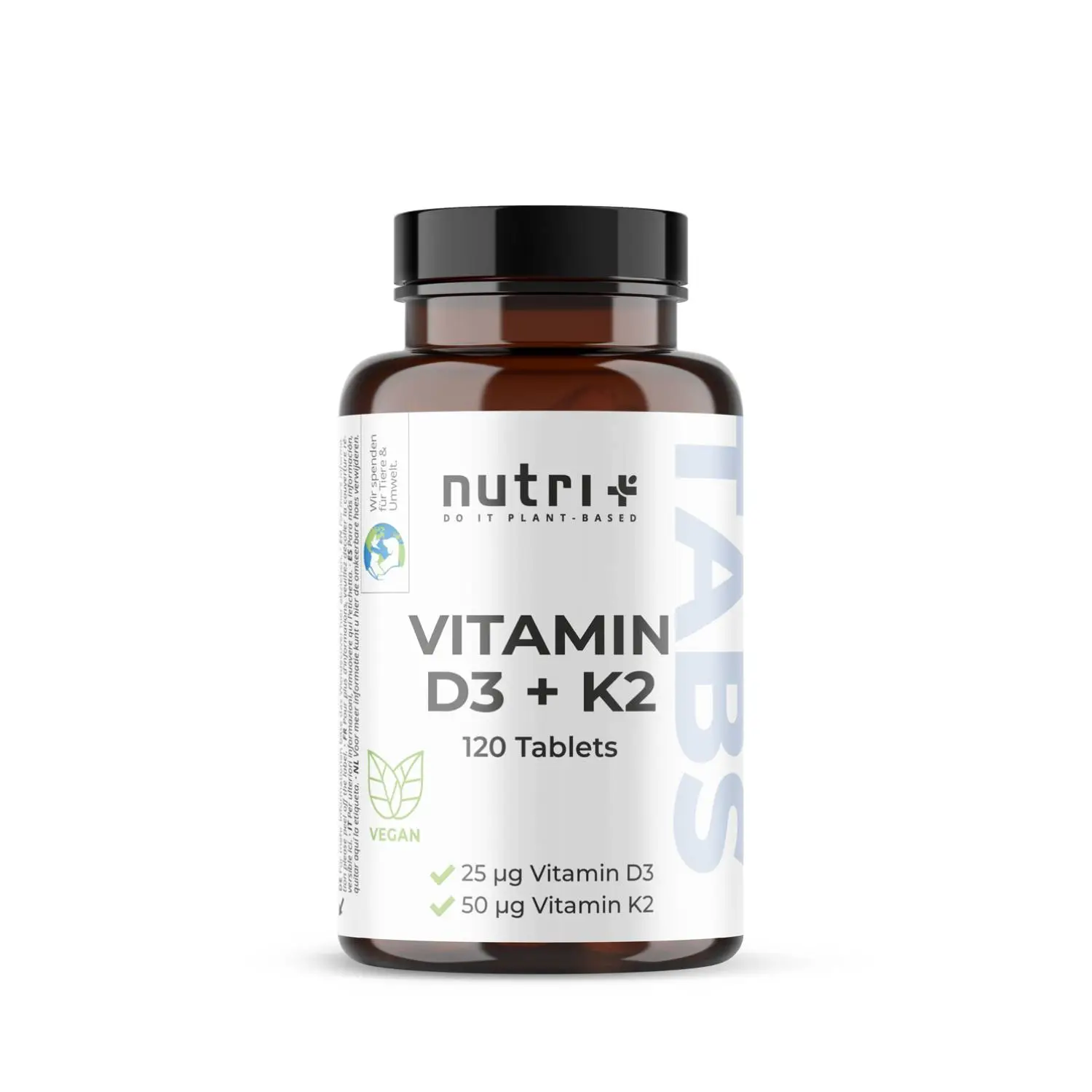
High-dose, plant-based tablets with a daily dose of 25 µg vitamin D3 and 100 µg vitamin K2 In Germany/Western Europe, the recommended daily vitamin D requirement of 20 µg is often not sufficiently covered. According to the Robert Koch Institute, almost 60 % of adults in Germany do not have an optimal vitamin D supply. As the body's own production of vitamin D from sunlight is subject to seasonal fluctuations and intake through diet alone is often insufficient, it is recommended to take a dietary supplement. Older people are particularly at risk of vitamin D deficiency, as the skin's ability to produce its own vitamin D decreases with age. People who spend most of their time indoors and are rarely outdoors also have reduced vitamin D production. As vitamin D and vitamin K2 have a synergistic effect, the combination of both vitamins in a supplement is particularly beneficial. Our nutri+ vitamin D3 + K2 product is 100 % vegan and is made from natural sources such as lichen and plant substances. Vitamin D is important: Vitamin D contributes to normal immune system function Vitamin D contributes to the maintenance of normal muscle function, normal bones and normal teeth Vitamin D contributes to a normal calcium level in the blood and also to a normal absorption of phosphorus and calcium Vitamin D has a function in cell division Vitamin K is important: Vitamin K contributes to the maintenance of normal bones Vitamin K contributes to normal blood clotting This product should not be used as a substitute for a balanced and varied diet. Take care of a healthy lifestyle. Do not exceed the stated recommended daily dose. Store in a cool, dry place away from sunlight and out of the reach of children. Pregnant and nursing women should consult a physician before taking any Supplements.
Content: 0.038 kg (€394.47 / kg)
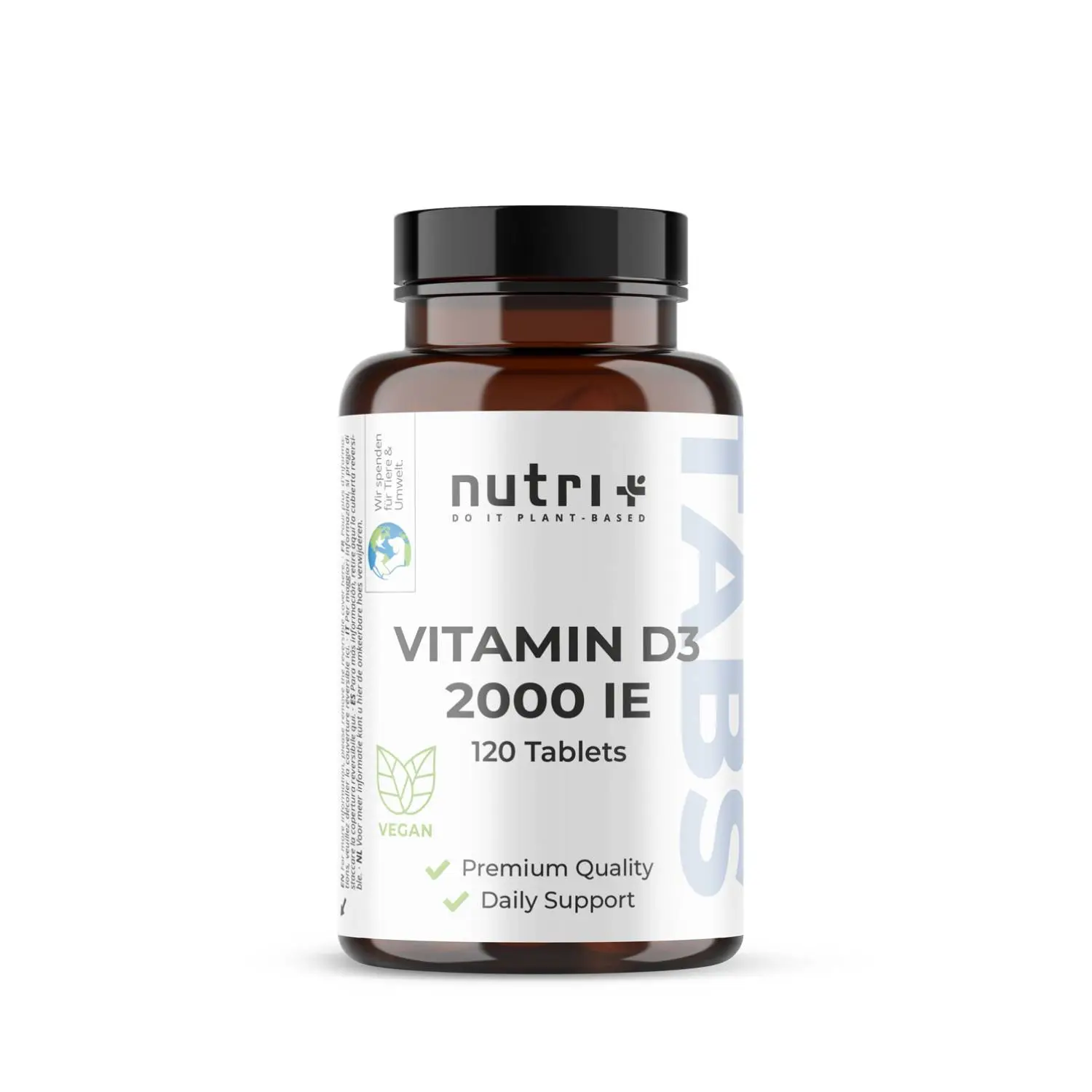
Vitamin D3 tablets Many people in Germany do not reach the recommended daily amount of 20 µg vitamin D. According to the Robert Koch Institute, almost 60% of adults are not optimally supplied with vitamin D - with consequences for their health and well-being. One of the main reasons for this is that our bodies produce vitamin D mainly through sunlight on the skin. In the fall and winter months, however, sunlight is often not enough - and our diet usually only provides small amounts of the vitamin. For this reason, taking a vitamin D supplement can be particularly useful in the darker months of the year. Older people in particular are at an increased risk of a deficiency, as the skin's ability to produce vitamin D decreases with age. People who spend most of their time indoors or rarely go out in the sun are also often affected. Why is vitamin D so important? Vitamin D has a function in cell division Vitamin D contributes to the normal function of the immune system Vitamin D contributes to the maintenance of normal teeth Vitamin D contributes to the maintenance of normal muscle function Vitamin D contributes to the maintenance of normal bones Vitamin D contributes to normal blood calcium levels Vitamin D contributes to the normal absorption/utilization of calcium and phosphorus High-dose pure vitamin D3 with 2000 IU Our nutri+ vitamin D3 tablets provide you with 50 µg (equivalent to 2000 international units) of vitamin D3 per tablet - perfect for supporting your vitamin D supply. The special thing about our product: in addition to vitamin D, it contains only acacia fiber, a high-quality dietary fiber and carrier. We have deliberately avoided unnecessary additives such as sweeteners, flavorings, colorings or preservatives. One can contains 120 tablets, which are sufficient for a eight-month supply if taken every two days. The product is 100% vegan (without lactose, milk protein and other animal ingredients) and is developed in Germany by our nutritionists and produced under the highest quality standards (IFS Food and GMP). This product should not be used as a substitute for a balanced and varied diet. Take care of a healthy lifestyle. Do not exceed the stated recommended daily dose. Store in a cool, dry place away from sunlight and out of the reach of children. Pregnant and nursing women should consult a physician before taking any supplements.
Content: 0.0252 kg (€396.43 / kg)
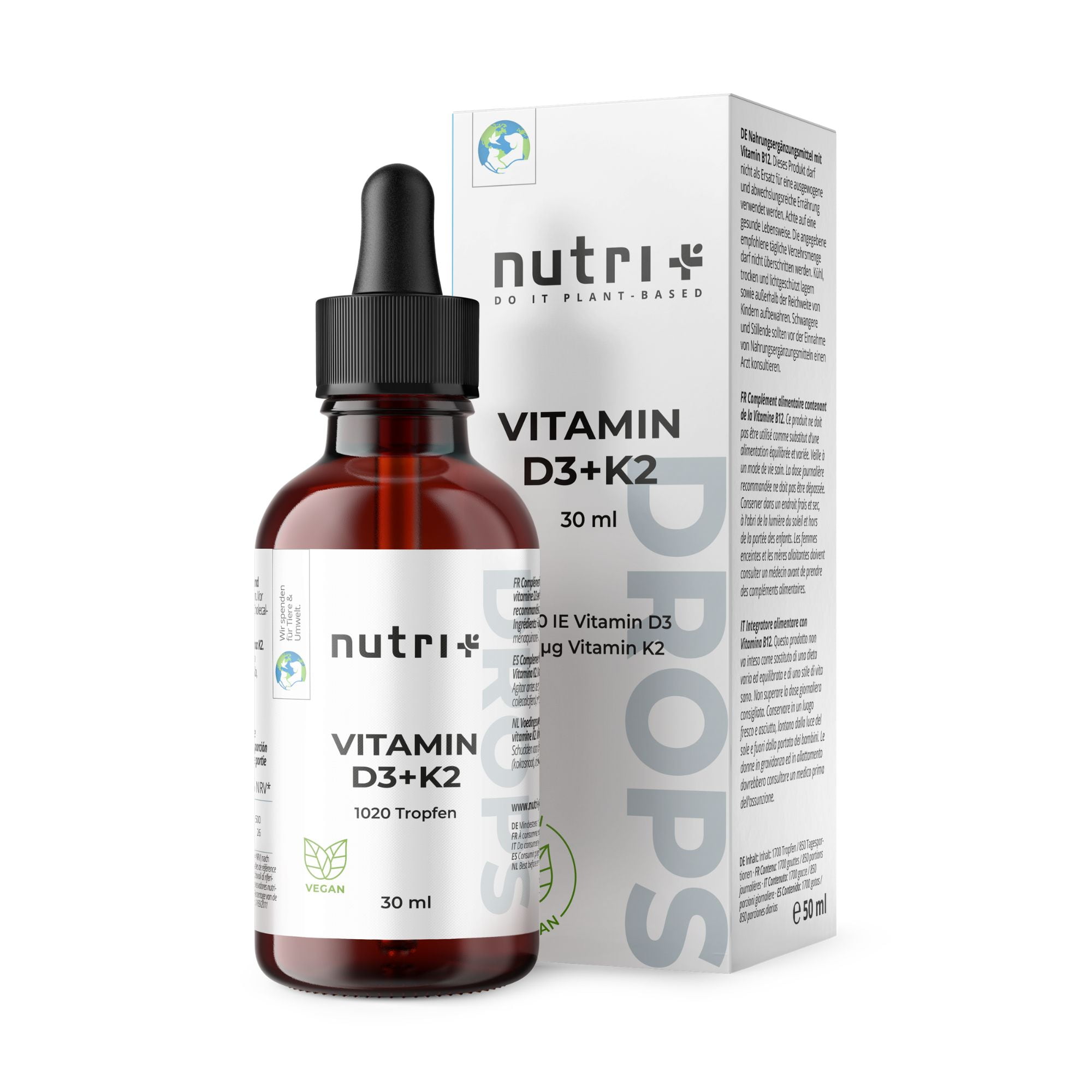
Your Daily Vitamin D Supply – Simple in One Drop With our high-dose nutri+ D3 + K2 drops, you can cover your daily vitamin D requirement – the so-called sunshine vitamin – with just one drop. Ideal for anyone who prefers not to swallow capsules or tablets. We use a tasteless and odorless MCT oil based on coconut as a carrier oil. Since vitamin D3 and vitamin K2 are fat-soluble vitamins, they require fat as a transport medium. The combination of vitamin D, vitamin K, and oil therefore ensures that the micronutrients can be optimally absorbed by the body. Vitamin D is considered a critical nutrient: a large portion of the population is not adequately supplied. According to data from the Robert Koch Institute, around 60% of adults in Germany have an insufficient vitamin D status. Since vitamin D and vitamin K complement each other effectively, we have combined both micronutrients in our D3 + K2 drops. The functions of the two vitamins at a glance: Vitamin D Vitamin D contributes to the maintenance of normal bones Vitamin D contributes to normal calcium levels in the blood Vitamin D contributes to the maintenance of normal muscle function Vitamin D contributes to the maintenance of normal teeth Vitamin D contributes to the normal function of the immune system Vitamin D has a role in cell division Vitamin D contributes to the normal absorption/utilization of calcium and phosphorus Vitamin D helps reduce the risk of falls associated with postural instability and muscle weakness. Falls are a risk factor for bone fractures in men and women aged 60 and over Vitamin K contributes to the maintenance of normal bones contributes to normal blood clotting Note: People taking anticoagulant medications should consult a doctor before taking vitamin K-containing dietary supplements. This product must not be used as a substitute for a balanced and varied diet. Maintain a healthy lifestyle. Do not exceed the stated recommended daily intake. Store in a cool, dry place, protected from light, and out of reach of children. Pregnant and breastfeeding women should consult a doctor before taking dietary supplements.
Content: 0.03 L (€499.67 / L)
Vitamin D3
What is vitamin D?
Vitamin D is a fat-soluble vitamin. It is not a classic vitamin because the body can produce it itself when exposed to sufficient sunlight. Vitamin D regulates calcium and phosphate levels, thereby contributing to the maintenance of normal bones. It also plays a role in other metabolic processes and influences muscle function.
What is the difference between vitamin D2 and vitamin D3?
A distinction is made between vitamin D2 and vitamin D3 depending on where they occur. Vitamin D3 (cholecalciferol) is typically found in animal-based foods, while vitamin D2 (ergocalciferol) is mainly found in plant-based sources. Vitamin D3 is better absorbed by the body and therefore has a higher bioavailability. This form is therefore often found in dietary supplements. However, many of these supplements are not vegan and are usually derived from lanolin (wool wax). But there is now also a vegan production method: the vitamin D3 in our nutri+ vitamin D supplements, for example, comes from lichen.
Why does the body need vitamin D3?
Vitamin D...
- plays a role in cell division
- contributes to the normal functioning of the immune system
- contributes to the maintenance of normal teeth
- contributes to the maintenance of normal muscle function
- contributes to the maintenance of normal bones
- contributes to normal blood calcium levels
- contributes to normal absorption/utilization of calcium and phosphorus
Are there foods with a high vitamin D content?
It is difficult to obtain sufficient vitamin D through diet alone, as the vitamin is only found in a few foods. The exceptions are fatty fish such as herring or salmon, egg yolks, and some edible mushrooms. In Germany, only 2-4 µg of vitamin D are consumed daily through food, which corresponds to about 10-20% of the recommended daily intake of vitamin D.
What happens when there is a vitamin D deficiency?
A vitamin D deficiency is particularly noticeable in the bones. In infants and children, a deficiency leads to demineralization of the bones, causing the bone structure to deform. This is known as rickets. In adults, this bone disease is known as osteomalacia.
In addition, an insufficient supply of vitamin D increases the risk of osteoporosis. Non-specific symptoms can also indicate a deficiency. These include frequent infections, mood swings, reduced muscle strength, and fatigue.
However, the majority of the German population does not have an acute vitamin D deficiency. Nevertheless, almost 60% of Germans do not have an adequate supply of vitamin D.
Are there risk groups for deficiency?
People who are exposed to little sunlight (e.g., in winter, indoors, or for cultural/religious reasons) are among the risk groups. Older people have a higher risk of deficiency, as vitamin D production decreases significantly with age. People with strong skin pigmentation are also at greater risk. This is because the lighter the skin, the more vitamin D can be produced. Infants are also at risk of deficiency, as breast milk has a low vitamin D content and they should not be exposed to direct sunlight. Therefore, vitamin D supplementation makes sense, especially for the risk groups mentioned above and during the dark months of the year.
Please note: Sunscreens inhibit the body's production of vitamin D. Depending on your vitamin D supply, it may therefore be advisable to take a vitamin D supplement all year round. This should be discussed with your doctor. A vitamin D test is inexpensive and can give you a good overview of your vitamin D status.
How much vitamin D should I take per day?
The estimated value for an adequate vitamin D intake in the absence of the body's own production is 20 µg per day. This estimated value applies to all age groups, except for infants up to 12 months of age, for whom the value is 10 µg per day.
How much sunlight does the body need to produce sufficient vitamin D?
Vitamin D production in the skin through UVB radiation depends on factors such as latitude, clothing, weather, season and time of day, skin type, and sun protection. Therefore, individual vitamin D production can vary greatly. As a rough guide: in Germany, during the summer months, it is usually sufficient to expose your skin to the sun for about 15 minutes a day between 12 noon and 3 p.m. while wearing shorts and a T-shirt.